
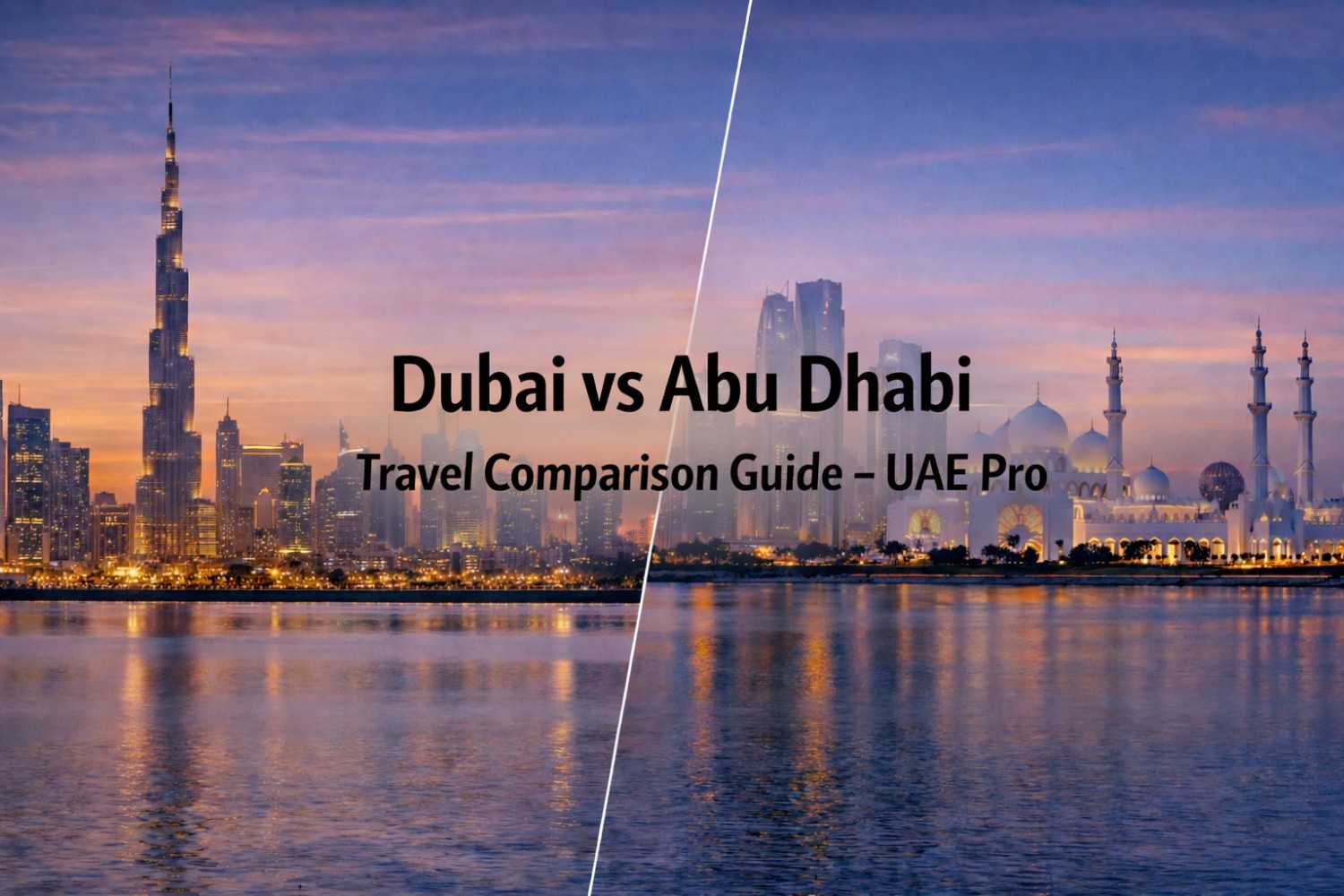
Dubai and Abu Dhabi are the two most popular travel destinations in the United Arab Emirates, each offering a unique blend of culture, luxury, and modern attractions. Travelers often find themselves comparing these cities to decide which one suits their travel style, budget, and expectations better.
While Dubai is globally known for its skyscrapers, shopping festivals, and vibrant nightlife, Abu Dhabi is admired for its cultural depth, calm ambiance, and architectural elegance. Both cities are well-connected, tourist-friendly, and offer world-class hospitality experiences.
Choosing between Dubai and Abu Dhabi depends largely on what kind of traveler you are-whether you seek fast-paced excitement, relaxed cultural exploration, family-friendly attractions, or budget-conscious planning. This guide breaks down every major aspect to help you decide wisely.
Table of Contents:
Introduction: Dubai vs Abu Dhabi for Travelers
City Vibe and Overall Experience
Attractions and Sightseeing
Hotels and Accommodation Options
Food, Dining, and Nightlife
Travel Costs and Budget Planning
Transportation and Connectivity
Conclusion: Dubai vs Abu Dhabi – Which City Should You Choose?
Frequently Asked Questions (FAQs)
1. City Vibe and Overall Experience

Dubai delivers a fast-paced, high-energy lifestyle that immediately feels international and futuristic. The city is built around ambition, innovation, and constant motion, with iconic skyscrapers, world-class shopping malls, immersive theme parks, desert adventures, and a nightlife that stays active well past midnight. From luxury beach clubs and rooftop lounges to large-scale events and festivals, Dubai offers endless stimulation, making it especially appealing to travelers who enjoy excitement, variety, and a sense of being at the center of global trends.
Abu Dhabi, on the other hand, presents a calmer and more elegant atmosphere rooted in cultural depth and thoughtful urban planning. While the city is equally modern, its development feels more spacious and balanced, with wide boulevards, open waterfronts, and well-preserved cultural landmarks. Museums, heritage villages, mosques, and serene beaches define the experience, making Abu Dhabi ideal for visitors who appreciate meaningful exploration, cultural learning, and a relaxed pace without sacrificing comfort or sophistication.
In Dubai, the energy comes from its diversity and constant activity. With people from all over the world, the city feels like a true global hub where languages, cuisines, and lifestyles blend seamlessly. Crowds, traffic, and packed attractions are part of the experience, but so is the thrill of discovering something new at every turn. The city rarely slows down, which creates a sense of excitement and momentum that many travelers find addictive.
Abu Dhabi feels more traditional and composed, offering a sense of space and tranquility that allows visitors to slow down and absorb their surroundings. Attractions are less crowded, experiences feel more intimate, and daily life moves at a gentler rhythm. While both cities are exceptionally safe, clean, and well-organized, the emotional experience clearly differs-Dubai energizes and inspires with its intensity, while Abu Dhabi soothes and refreshes with its calm elegance.
Tips:
Choose Dubai if you enjoy fast-paced city life and entertainment.
Choose Abu Dhabi if you prefer calm, cultural, and scenic surroundings.
First-time UAE visitors often start with Dubai and extend to Abu Dhabi.
2. Attractions and Sightseeing for the travellers

Dubai is renowned for its bold, record-breaking attractions that emphasize scale, innovation, and entertainment. Landmarks such as Burj Khalifa, Palm Jumeirah, and massive theme parks create a visually striking and highly engaging experience for visitors. The city is constantly evolving, with new observation decks, immersive experiences, water parks, and family-friendly attractions being introduced regularly to keep tourism vibrant and future-focused.
In contrast, Abu Dhabi places a strong emphasis on cultural identity, heritage, and artistic expression. Iconic sites such as the Sheikh Zayed Grand Mosque, Louvre Abu Dhabi, and Qasr Al Watan reflect the emirate’s commitment to preserving history while presenting it through world-class architecture. These attractions encourage visitors to slow down, observe details, and gain deeper insight into the region’s culture and values.
Dubai’s sightseeing experience is largely interactive and entertainment-driven. Visitors can enjoy thrill rides, immersive digital exhibits, luxury yacht cruises, sky-high dining, and experiential attractions designed to impress and excite. The focus is often on creating memorable moments through action, innovation, and spectacle, making Dubai particularly appealing to families, first-time visitors, and travelers seeking high-energy experiences.
Abu Dhabi’s attractions, by comparison, feel more contemplative and visually serene. Museums, architectural landmarks, and cultural spaces are designed to inspire reflection and appreciation rather than adrenaline. While both cities offer desert safaris, pristine waterfronts, and modern infrastructure, their attraction styles clearly differ-Dubai suits travelers seeking excitement and novelty, while Abu Dhabi caters to those who value culture, design, and a more thoughtful sightseeing journey.
Tips:
Plan Dubai if you want record-breaking attractions and theme parks.
Visit Abu Dhabi for museums, mosques, and cultural landmarks.
Combine both cities for a well-rounded UAE experience.
3. Hotels and Accommodation Options

Dubai stands out for its sheer diversity of accommodation options, making it one of the most flexible cities for online hotel booking. Travelers can choose from ultra-luxury icons like Burj Al Arab and Atlantis The Palm, as well as mid-range business hotels, serviced apartments, and budget-friendly stays. Many hotels are strategically located near shopping malls, beaches, business districts, and metro stations, allowing visitors to easily tailor their stay around sightseeing, work, or leisure.
Abu Dhabi, in comparison, is known for its spacious, refined, and quieter accommodation experiences. Hotels here often focus on comfort, privacy, and scenic surroundings, with a strong presence of beachfront resorts and premium business hotels. Properties such as Emirates Palace reflect the city’s preference for elegance and grandeur rather than density. Guests typically enjoy larger rooms, calmer environments, and a slower pace that complements the city’s overall atmosphere.
For budget travelers, Dubai generally offers more frequent discounts and promotional deals due to intense competition among hotels. The high volume of visitors encourages dynamic pricing, flash sales, and seasonal offers, making it easier to find affordable stays across different neighborhoods. From short stopovers to long-term stays, Dubai’s accommodation market caters to every price point with wide availability.
Abu Dhabi, while slightly more premium on average, delivers excellent value through space, service consistency, and peaceful surroundings. Both cities uphold high hospitality standards and international service benchmarks, but the experience differs in tone-Dubai prioritizes choice, convenience, and variety, while Abu Dhabi emphasizes tranquility, comfort, and a more relaxed hotel stay.
Tips:
Use online hotel booking platforms to compare deals in both cities.
Dubai is better for budget variety and frequent offers.
Abu Dhabi suits travelers seeking calm and spacious resorts.
4. Food, Dining, and Nightlife with many options

Dubai is widely regarded as a global culinary hotspot, attracting chefs, restaurateurs, and food lovers from around the world. The city offers an extraordinary range of dining options-from local street food and casual cafés to luxury fine-dining venues featured in the Michelin Guide Dubai. Whether it’s Emirati, Indian, Japanese, Italian, or fusion cuisine, Dubai’s food scene thrives on diversity, creativity, and constant innovation, making dining an experience in itself rather than just a necessity.
Abu Dhabi also delivers high-quality dining experiences, but with a more refined and understated character. Restaurants here often emphasize atmosphere, craftsmanship, and cultural authenticity, allowing guests to enjoy meals at a slower, more relaxed pace. Many dining venues are located within luxury hotels, cultural districts, or along waterfronts, offering scenic views and thoughtfully curated menus that reflect both international flavors and traditional Middle Eastern influences.
When it comes to nightlife, Dubai clearly leads with its energetic and late-night culture. The city is filled with beach clubs, rooftop lounges, live entertainment venues, and night brunches that extend well into the early hours. Nightlife is closely tied to dining, with many restaurants transforming into social hotspots after sunset, appealing to travelers who enjoy vibrant evenings and a buzzing social scene.
Abu Dhabi’s nightlife, by contrast, is more laid-back and intimate. Evenings often revolve around hotel lounges, upscale bars, cultural performances, and quiet waterfront cafés rather than high-energy party scenes. While food lovers will appreciate both cities for quality and variety, Dubai is ideal for those who enjoy nightlife-driven dining and constant excitement, whereas Abu Dhabi suits travelers who prefer elegant meals, calm evenings, and a more relaxed social atmosphere.
Tips:
Dubai is ideal for food exploration and nightlife lovers.
Abu Dhabi suits relaxed dinners and cultural dining.
Families may find Abu Dhabi’s dining scene more peaceful.
5. Travel Costs and Budget Planning

Dubai often offers stronger advantages when it comes to airfare and accessibility. With a high volume of international routes operating through Dubai International Airport, travelers benefit from frequent flights, competitive airline pricing, and a wider choice of carriers. This increased competition makes it easier to find cheap flights, especially when booking in advance or traveling during off-peak seasons, helping visitors plan cost-effective trips with greater flexibility.
Abu Dhabi flights, typically operating through Abu Dhabi International Airport, can sometimes be slightly higher in price due to fewer flight options. However, the city often compensates for this with better overall value once travelers arrive. Accommodation, attractions, and experiences in Abu Dhabi tend to feel more inclusive and less driven by premium add-ons, which can balance out the initial travel cost.
When it comes to daily expenses, Dubai offers a wide spending spectrum. Budget travelers can manage affordable meals, public transport, and reasonably priced stays, while luxury options-shopping, dining, and entertainment-can quickly raise daily costs. The abundance of high-end experiences also increases the likelihood of impulse spending, especially for travelers drawn to lifestyle upgrades and premium attractions.
Abu Dhabi generally promotes more predictable budgeting, with fewer temptations toward spontaneous luxury splurges. Dining, transport, and attractions are often priced more consistently, making it easier to estimate daily costs. Ultimately, budget-conscious travelers can enjoy both cities comfortably with smart planning, advance bookings, and clear spending priorities-Dubai rewards deal-hunters and flexible planners, while Abu Dhabi suits those who prefer steady, well-balanced expenses.
Tips:
Look for cheap flights early, especially for Dubai.
Abu Dhabi helps control spending with fewer distractions.
Plan activities in advance to manage overall travel costs.
6. Transportation and Connectivity

Dubai has one of the most advanced public transport systems in the region, featuring a well-connected network of metros, trams, buses, and water transport. The Dubai Metro alone links major airports, business districts, shopping malls, and tourist attractions, making it highly convenient for visitors. Clear signage, affordable fares, and frequent services allow tourists to explore the city comfortably without relying on private transport.
In contrast, Abu Dhabi depends more on taxis and an organized bus network to serve travelers. While the city does not yet have a metro system, taxis are widely available, clean, and reasonably priced, offering door-to-door convenience. This setup works well for travelers who prefer comfort over planning routes, though it provides slightly less flexibility for spontaneous sightseeing.
Dubai’s excellent connectivity extends beyond local transport to its global travel links. With one of the busiest international airports in the world, travelers find it easy to book flights, manage layovers, and connect seamlessly to other destinations. This strong infrastructure supports efficient multi-day itineraries, allowing tourists to cover more attractions in a shorter time.
Abu Dhabi offers a smoother driving experience with wider roads, less congestion, and better traffic flow compared to larger metropolitan areas. Navigation across the city feels calm and organized, making it ideal for travelers who prefer relaxed movement between attractions. For those renting cars or using taxis, Abu Dhabi delivers a stress-free travel experience with minimal delays.
Tips:
Dubai is best for travelers relying on public transport.
Abu Dhabi is ideal for taxi-based and relaxed travel.
Intercity travel between Dubai and Abu Dhabi is easy and affordable.
Dubai vs Abu Dhabi: Making the Right Choice for Your Trip
Dubai and Abu Dhabi each deliver outstanding travel experiences, yet they appeal to different mindsets and travel styles. Dubai is ideal for travelers who thrive on energy, variety, and constant activity. The city excels in entertainment, shopping, nightlife, and iconic attractions, supported by excellent connectivity and the ease of online flight booking with flexible options. Whether it’s a short stopover or a packed holiday, Dubai’s fast pace and endless choices make it especially attractive for first-time visitors, families, and travelers who want to maximize experiences in a limited time.
Abu Dhabi, in contrast, resonates with travelers who value depth, comfort, and cultural richness. Its landmarks, museums, mosques, and waterfront resorts encourage slower exploration and meaningful engagement with local heritage. The city’s refined hospitality, spacious hotels, and calm urban design create a sense of balance and relaxation that suits couples, culture enthusiasts, and those looking to unwind without compromising on quality or sophistication.
Ultimately, the better destination depends on your travel goals, available time, and budget preferences. For an even more rewarding experience, combining both cities into a single itinerary is highly recommended. Experiencing Dubai’s modern energy alongside Abu Dhabi’s cultural elegance offers a well-rounded perspective of the UAE-blending innovation, tradition, excitement, and tranquility into one truly complete and memorable journey.
Frequently Asked Questions (FAQs):
Is Dubai better than Abu Dhabi for first-time travelers?
Yes, Dubai is often preferred by first-time travelers due to its wide range of attractions, public transport, and entertainment options.
Which city is more budget-friendly for travelers?
Dubai usually offers more choices for cheap flights and budget stays, while Abu Dhabi provides better value for calm and spacious accommodation.
Is Abu Dhabi suitable for family travel?
Yes, Abu Dhabi is very family-friendly with cultural attractions, clean beaches, and a relaxed environment.
Which city has better sightseeing options?
Dubai is ideal for modern landmarks and theme parks, while Abu Dhabi is better for cultural, historical, and architectural sightseeing.
Is online hotel booking easier in Dubai or Abu Dhabi?
Online hotel booking is easy in both cities, but Dubai offers a wider range of hotels across all budgets.
Can travelers visit both Dubai and Abu Dhabi in one trip?
Yes, both cities are well connected by road, making it easy to explore both destinations in a single itinerary.
Which city is better for nightlife and dining?
Dubai offers a more vibrant nightlife and global dining scene, while Abu Dhabi focuses on relaxed and refined experiences.